
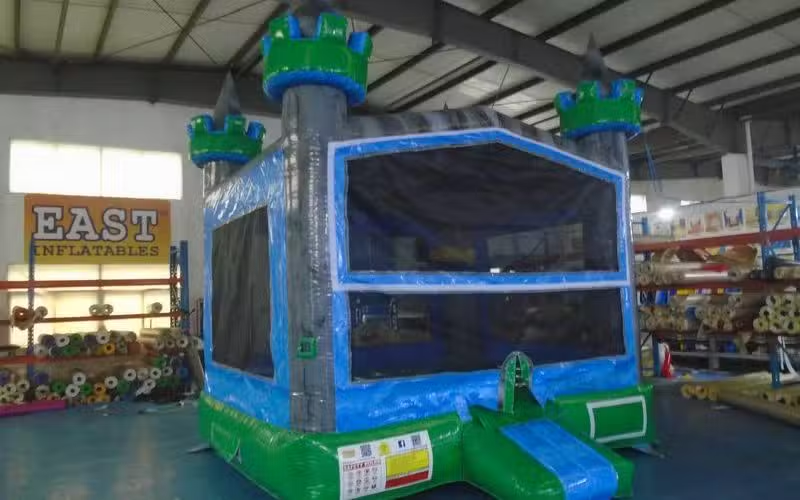
Selecting the right bounce house size is a balancing act between the space you have available and the number of children you intend to host. While it is tempting to go for the biggest model available, a unit that is too large can become a safety hazard or simply swallow up your entire yard.
Here is how to calculate the perfect size for your outdoor space.
1. Measure Your “Safe Zone”
The physical footprint of the bounce house is only half the story. You must account for a 5-foot “safety perimeter” around the entire inflatable.
- Clearance: If you buy a 13′×13′ bounce house, you need at least a 23′×23′ clear area in your yard.
- Overhead Hazards: Check for low-hanging tree branches, power lines, and lighting fixtures. Many inflatable roofs are at least 12–15 feet high, and you must ensure there is no contact with overhead wires or dry branches.
2. Terrain and Leveling
The ground must be flat and stable. Even a small slope can cause a bounce house to tip or place uneven stress on the seams, which significantly reduces the lifespan of the PVC.
- Surface: Grass is ideal because it allows for secure anchoring with heavy-duty stakes.
- Concrete/Asphalt: If you are setting up on hard surfaces, you will need to use sandbags (minimum 50–100 lbs per anchor point) instead of stakes. Ensure your chosen size allows enough room to place these heavy sandbags safely around the perimeter without creating a tripping hazard.
3. Capacity vs. Footprint
In the U.S. commercial market, a 13′×13′ unit is the industry standard for small-to-medium backyard parties.
- Small Yards (<20′×20′): Opt for a standard 10′×10′ or 13′×13′ bounce house. These provide enough fun for 4–6 children without overcrowding the yard.
- Medium Yards (20′×40′): This allows you to upgrade to a “Combo” unit, which usually includes a small slide or an obstacle course. These are typically 15′×20′ or larger.
- Large Lots: If you have the space, a large obstacle course or a dual-lane slide is a massive draw, but remember to verify the power requirements for the larger blowers needed to support them.
4. The “Inflation Tube” Placement
When mapping out your yard, don’t forget the inflation tube. This tube usually extends 3–5 feet from the back or side of the unit. You need to position the bounce house so that the tube reaches your power outlet without the extension cord stretching across a walking path or being pulled tight, which could cause a tripping hazard or pull the blower over.
5. Final Checklist Before You Buy
Before committing to a specific model, walk your yard with a tape measure and a marker.
- Mark the corners: Use flags or chalk to outline the perimeter of the inflatable plus the 5-foot safety buffer.
- Pathways: Is there a clear path for the delivery truck to reach the setup spot?
- Power: Is there a dedicated 15A or 20A outlet within 50 feet of the setup area?
By focusing on these practical dimensions, you ensure that your backyard remains both a fun zone and a safe environment for your guests. Proper sizing not only makes for a better party experience but also simplifies your setup process and protects your equipment from unnecessary wear.